Understanding Yourself Leads to Success

by  Jan Skroud and Matej Mendlik , Authors  / Posted on

Read how two expats give key advice, “understand yourself leads to success”. Inomee founders, Jan Skroud and Matej Mendlik (Matt) both share their life and career stories that led them to leave their corporate careers and start their own business. They also share how relocating to London and joining FOCUS impacted their last five years.

Congratulations on launching your new business. Before we go to details about the business itself tell us about your move to London and the reason behind it.

Matt: In 2017, way before the pandemic, I received a job offer from my previous employer to head marketing efforts in the Asia Pacific region that were managed from London.

Jan: And we had an agreement that whoever gets an international offer first, the other one will follow. So, I resigned from my role as a sales and marketing director, packed our bags and soon we were headed to London with one-way tickets.

Why did you join FOCUS?

Matt: We were both enrolled by my employer. Thanks to FOCUS we were able to attend many events which was nice considering we were the New Kids on the Block.

Jan: I also enrolled in the Career Development Program, which I did not get to finish as I landed a new job with Sodexo in mid-January 2018.

What made you leave and start your own business?

Jan: Even though I was in a director role in Prague, I had to build my career in the UK. My last position in a corporation was global director of sales for a global leader in aviation hospitality, and then the pandemic started. I recognize that the global pandemic was a very difficult time for many people around the world and it also has taken its toll in my extended family. But from my perspective, I must say it was the kick I needed to find the courage and change my career.

Matt: Due to Covid, we both ended up at home, which led to endless discussion about our future. Jan started his business quite early after the first lockdown happened. I was working from home at that time, but I felt part of this new business idea from the get-go, as I was seated at the same kitchen table.

What business did you launch?

Jan: In fact, Matej and I founded two companies in the past three years. Skroud Consulting is business-to-business facing and Income is consumer facing. I founded Skroud Consulting in 2019 with a mission to enable organisations, leaders, and their teams to find ways to work better together, connect, and embed collaborative team culture, forming high-performing teams. The vision of SC is to help organisations drive growth through people.

Matt: In 2022, we founded Inomee, a company that provides guidance in the world of career change. We help individuals identify their strengths, what motivates them as well as what behavioural traits are holding them back from success. Inomee helps people bring clarity into their career vision and achieve goals in the workplace. Whether it is winning an interview, management skills, learning how to positively influence others to get buy-in from colleagues.

Keep reading to find out how Jan and Matej applied the idea “understand yourself leads to success” to their business journeys!

What would you say is the most important thing to do to run a successful business in the UK?

Jan: It is your ability to demonstrate the value you bring to the table, in this case to the marketplace. London is a very competitive place. Because of its size and purchasing power, London drives innovation and many new companies enter the market every day. So, the key question is how to stand out from the crowd and make your target audience choose your product or service. In our case, it is our unique methodology which is a combination of life experience, executive coaching, mentoring and facilitation. When leaders or teams face a business challenge, they can find sources of information online. Our competitors advise how to solve a challenge but we go one extra step further and help our clients utalise the skills they already posses to do this, and that’s where the miracle happens.

Matt: We focus on delivering tangible results, helping people to act to achieve the change they want.

What would you advice be for those who want to set up their own business in the UK?

Jan: Make a proper business plan that includes a sales and marketing strategy, focus on financial planning, and surround yourself with professionals who can help you you grow your business or assist in the areas you are not familiar with. Be open to asking for help and choose your suppliers wisely. But most importantly, be patient and believe in yourself and your product or service.

Matt: Be ready to accept that owning your business is an amazing life experience only if you are ready to accept that it is also full of attempts and failures. So be open to learning not only about business, your customers or product, but also about yourself, and that can be the hardest thing.

What are the next steps for you?

Jan: This year will be about focusing on business development and bringing our tools and services to a wider base of customers. We are still a very young company with relatively low brand awareness

Matt: The focus for the next couple of months will be to make sure Inomee gets the attention it deserves. I’ll be focusing on everything digital.

Enjoyed reading a quick glimpse about Jan and Matej’s career journeys? Want to keep reading their story? Check out our FOCUS Website to figure out how they applied the idea “understand yourself leads to success”. Want to support Jan and Matej? Go support them at iNOMEE to find out more about their company here in London!

Photos courtesy of: Unsplash and FOCUS Magazine

6 Ways International Schools and Families Can Collaborate for Student Success!

by  TASIS England, TASIS England is a leading international day and boarding co-ed School near London for students aged 4-18  / Posted on

Introduction

International schools play a vital role in shaping students’ success, especially at a time when our economies and cultures are more connected than ever. Furthermore, the foundation for student success is strengthened when schools and families work together.

With students often coming from diverse cultural and linguistic backgrounds, strong parent-school partnerships can significantly impact academic performance, emotional well-being, and overall development. Building these partnerships requires concerted effort from both sides, ensuring that parents are not just informed but actively involved in their child’s school experience.

Discover six key strategies that international schools and families can implement to enhance student success.

1. Establish Open and Transparent Communication
Communication is the foundation of a strong school-family relationship. In a clear and consistent manner, parents should be kept informed about their child’s academic progress, school events, and any challenges the school or the child may be facing. Additionally, international schools should bear in mind the choice of vocabulary to accommodate non-English-speaking families, and providing information in multiple languages to ensure accessibility for diverse families.

International schools should leverage multiple channels, including:

  • Regular newsletters: Keep parents informed about school events, curriculum updates, and student achievements.
  • Parent-teacher meetings and conferences: International schools can schedule frequent meetings, both in person and online to accommodate differing time zones, to discuss academic progress, challenges, and student well-being.
  • Parent portals and apps: Digital tools like Google Classroom and Seesaw provide real-time access to school updates and student progress.

By maintaining lines of communication, including opportunities for two-way dialogue, families feel more engaged in their child’s education and can provide necessary support at home.

Families can also support two-way communication by providing the school with information about their child that would help the school support their learning and emotional growth. For example, if the child is experiencing stress due to health challenges of a family member, it is helpful for the school to know this information and partner with the family to support the child while at school.

2. Implement Personalised Support for Relocating Families

Since international schools often cater to expatriate families, they provide support systems to ease transitions into an often new culture and country. Of course, the challenges and needs of each family will be different, so a school’s efforts to support should be personalized where possible. Suggested effective strategies include:

  • Orientation programs for new students and families
  • Counseling services for adaptation and cultural integration: Schools can collaborate with parents to address social, emotional, and mental health needs with experts.
  • Student buddy systems to help newcomers settle in with peers

3. Community Building and Support Networks

A strong school community benefits everyone. As parents and guardians navigate the world of education alongside their children, and possibly even navigate a transition into an entirely new country upon relocation, international schools have a crucial role in facilitating parent-to-parent connections. This can be by:

  • Organizing parent networking events
  • Creating social groups for new families
  • Offering mentorship programs for parents of transitioning students

When families feel part of a supportive community, they are more likely to stay engaged and actively contribute to their child’s education.

4. Foster a Culturally Inclusive Environment

International schools serve diverse communities, often with students and families from various cultural backgrounds. Such schools, then, have a unique opportunity to dedicate time to developing a sense of belonging by acknowledging and celebrating different traditions, languages, and customs. This can be done through various ways, such as:

  • Multicultural events and celebrations: Families could be invited to share their traditions through cultural fairs, language clubs, and international festivals.
  • Language support programs for non-native speakers: Parents must be informed about English-as-an-Additional-Language (EAL) programs the school offers and how they can support language development at home.
  • Encouraging parental involvement in sharing cultural perspectives

When families see their cultures represented and respected in an educational setting, they are more likely to feel connected to the school.

5. Encourage Active Parent Involvement

Parents play a crucial role in supporting their child’s learning outside the classroom. International schools, naturally serving diverse communities, must be especially mindful of different educational experiences. In that sense, schools can empower families by providing resources and guidance on how to support the understanding of academic concepts, identify learning styles and know the school’s curriculum. Ways to ensure this include:

  • Tailored learning plans: If a child has specific academic needs, schools can work with parents to create individualized strategies.
  • Interactive workshops for parents on curriculum and teaching methods: Schools can host workshops, both in person and online, where teachers demonstrate various teaching techniques parents can use at home.
  • Encouraging initiatives that involve family participation: Schools can also involve parents in hands-on activities, such as art exhibitions or sports festivals, where families can engage in learning alongside their children.

When parents understand how their child learns best, and have a clear understanding of the educational offering of the international school, they can provide more meaningful support at home.

6. Prioritise Student Well-being and Mental Health
A child’s well-being is just as important as their academic success. When students receive consistent emotional support at school and home, they ultimately develop greater confidence and motivation to succeed. Schools and families should work together to ensure students feel emotionally supported and develop resilience. Schools can assist by:

  • Hosting parent education sessions on adolescent development and well-being: Schools can invite guest speakers, such as psychologists or health professionals, to provide insights on maintaining a healthy emotional balance.
  • Providing counseling services and mental health resources: Designated safe spaces within the school can help reduce the stigma surrounding mental health and encourage students to seek support when needed.
  • Implementing mentorship programs that connect students with supportive role models

Parents should also be encouraged to foster open conversations with their children about mental health and emotional well-being, ensuring that students feel safe discussing their struggles and seeking help when needed.

Key Takeaways
Collaboration between international schools and families creates a nurturing environment that cultivates student success.

By prioritizing communication, personalized support, building a parent community, cultural inclusivity, parental engagement, and mental well-being, schools can create a supportive environment where students and their families flourish. When schools and families work together, students benefit from a well-rounded, supportive education that emboldens them to achieve personal and academic growth, thus reaching their full potential.

By taking intentional steps to strengthen parent-school partnerships, international schools create learning experiences that inspire, challenge, and nurture every student’s success, ensuring that students are equipped with the skills, knowledge, and emotional resilience needed for future success. The more collaborative the effort, the stronger the foundation for life-long learning and development.

🌍 Looking to Transfer Funds from Abroad?

by  gpanhelleux@focus-info.org,  / Posted on

We’ve partnered with Currencies Direct to offer our members access to expert foreign exchange services — with excellent exchange rates, no transfer fees, and personalised support.

Whether you’re buying property, managing living costs, or investing overseas, Currencies Direct can help you:
✅ Maximise your returns
✅ Lock in exchange rates
✅ Time your transfers with expert market insights
💡 Plus, get a FREE local VIBAN in your name for faster, easier transfers
🇺🇸 US clients can also benefit from tailored support amid ongoing dollar volatility.

🔗 Get a free quote and see how much you could save

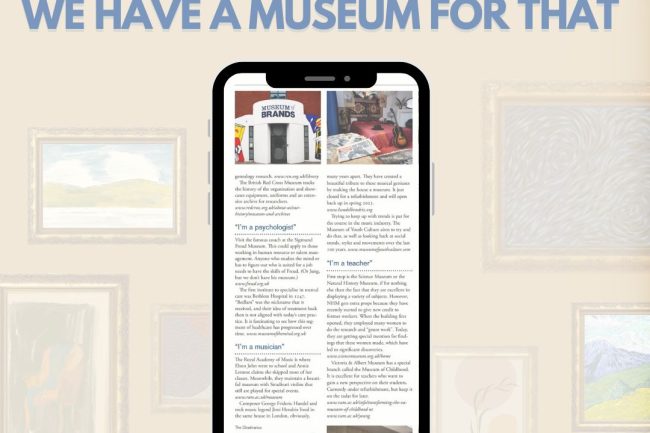
We have a Museum for that!

by  Amber Raney-Kincade, Author  / Posted on

London tour guide, Amber Raney-Kincade, has found over the years that in London – we have numerous nice museums, many of which have connections to different cleints professions. She started to play a game with her tour clients called, “What do you do/what do you like – we have a museum for that!” Ready? Let’s play.

“I’m a doctor”

Check out London’s top pathology museums: The Gordon Museum, Pathology Museum, and the Royal College of Surgeon’s Anatomy and Pathology Museum.

The Hunterian Museum also has 14,000 items and 500 different species, you can see a fetus in gestation for all nine months, the skeleton of a giant, various animals and human body parts, as well as Winston Churchill’s gold dentures.

Additionally, go to London’s Old Operating Theatre, located across from the Borough Market. This is where you can see an old surgical theatre and witness the instruments used to conduct surgeries 200 years ago.

“I’m a dentist”

Make an appointment with the St Bride’s Church & Charnel House to see the remains of skills that the dental students of London used for study. Also The British Dental Museum is run by the British Dental Association and has an array of dental art, instruments and tools, teeth and dentures, as well as anatomical models.

“I’m a nurse”

The Florence Nightingale Museum is the hub for all those in the nursing profession. Nearby, you can pay homage to Mary Seacole at her statue, in front of St Thomas’ Hospital, just around the corner from Florence Nightingale.

If the “FloMo” museum is closed, try the Royal College of Nursing & Heritage Centre. More uniforms are on display here, and many stories to tell of nurses of fame or otherwise.

The British Red Cross Museum tracks the history of the organisation and showcases equipment, uniforms and an extensive archive for researchers.

“I’m a psychologist”

Visit the famous couch at the Freud Museum London. This could apply to those working in human resource or talent management. Anyone who studies the mind or has to figure out who is suited for a job needs to have the skills of Freud.

The first institute to specialise in mental care was Bethlem Hospital in 1247. It is fascinating to see how this segment of healthcare has progressed over time.

“I’m a musician”

The Royal Academy of Music is where Elton John went to school and Annie Lennox claims she skipped most of her classes.

The Museum of Youth Culture aims to try to look back at social trends, styles and movements over the last 100 years.

“I’m a teacher”

First stop is the Science Museum or the Natural History Museum, if for nothing else than the fact that they are excellent in displaying a variety of subjects.

Victoria & Albert Museum has a special branch called the Museum of Childhood. It is excellent for teachers who want to gain a new perspective on their students.

“I’m a lawyer”

The Royal Courts of Justice is the home of civil law, and you can take a tour inside.

The Old Bailey is the criminal courthouse, where visitors can sit-in to see cases being presented. Here is where many historic criminals were placed on trial.

Those still needing to get their fill of legal stuff can visit and explore the UK Supreme Court building.

“I’m an engineer”

The Design Museum is only a few years old and is stunning both from a building perspective, as well as the items it houses.

“I’m in the military”

Start at the Churchill War Rooms, continue to the Imperial War Museums and the hop aboard the HMS Belfast.

You can soak up more information about uniforms and battles from The Household Cavalry Museum and The Household Guard Museum.

Head north to Hendon for the Royal Air Force Museum, or even further to Bletchley Park to see where the Enigma code was cracked.

“I work in IT (informational technology)”

You will also be enamored with Bletchley Park where the code was broken, but while up there you can visit the Museum of Computer History.

Pay homage to Ada Lovelace and Charles Babbage at the new exhibit at the Science Museum. Lovelace is considered the world’s first computer programmer.

In West Dulwich there is a small space dedicated to all things wireless, meaning the early days of radio. It’s called the British Vintage Wireless and Television Museum and it is truly an Aladdin’s cave of wonderment.

“I work in marketing (also works for sales)”

We have the Museum Of Brands Packaging And Advertising. You’re be surprised at how our taste in marketing moves over time, and what types of advertising can appeal to the various generations.

“I work in finance”

The Bank of England has a museum where those interested in all things money can learn that the first pulp used in paper money was from the mulberry tree.

One of the last “open outcry” markets in London is the London Metal Exchange.

“I work in food”

If you love to bake, or eat biscuits and cake, you can try to visit the Peek Frean. It is fairly new and not yet well-know, but it is treasure trove of biscuittins, cake paraphernalia and delicious items of the past.

Their website is currently down, so call 07752-311-082.

“I’m in politics”

The obvious choice is the Houses of Parliament Tours are available and are often booked up, so reserving in advance will avoid disappointment.

“I’m a librarian”

Paying a visit to The British Library is a must, if nothing else just to look at the King’s collection.

Charles Dickens has a whole museum to cover his life and items, too.

“I’m a firefighter”

London Fire Brigade Museum has good museum in their headquarters.

“I’m a police officer”

There are two police forces here in London” London Metropolitan Police and City of London Police. Both have small exhibits you can visit.

Also the Bow Street Police Museum is newly opened in Covent Garden and explores policing and criminal justice in the area.

Today the Clink Prison Museum showcases the history of this place, The Clink. In addition, you can also make reservations at The Clink Charity, restaurants in prisons run by those who are serving time.

“I work in fashion”

Down in Tooting there is the London Sewing Machine Museum, where once a month you can see a variety of old sewing machines, including one that belonged to the daughter of Queen Victoria.

Fashion and Textile Museum focuses on contemporary fashion and textile design.

“I work from home” or “I’m a parent”

We have an entire space dedicated to what homes have been like throughout the centuries, the Museum of the Home.

The Foundling Museum in Bloomsbury is dedicated to orphans.

“I’m a graphic artist”

The Cartoon Museum looks at the political cartoons of the 1700s and how this genre evolved over time.

Mina Lima is the graphic artist team behind all of the Harry Potter movies. Their designs and work are now highlighted in their shop on Wardour Street.

“I’m a gardener”

The Garden Museum takes you through the history of gardening. Follow that with a visit to Kew Gardens, a UNESCO World Heritage site where you can view 50,000 living plants, large Victorian glasshouses, and discover tons of plants that you never knew existed.

“I work in construction”

Go to the London Transport Museum to learn how they dug up London to create the underground system. Plus, you see the evolution of the double-decker bus from a horse-drawn wagon to today’s air conditioned model.

If roads aren’t your thing, the London Canal Museum will beguile you with how coal, goods and people navigated the canals.

There is a museum dedicated to Isambard Kingdom Brunel’s life and accomplishments in Rotherhithe.

“I’m an artist”

You could spend all of your time at the National Gallery, the Victoria & Albert, The Courtauld Gallery or even The Wallace Collection to discover beautiful art.

Travel to Greenwich and discover The Fan Museum.

Still want some paintings? Visit Apsley House, the former home of Arthur Wellesley, the 1st Duke of Wellington.

“I’m a priest/pastor/rabbi/Ishtar”

You’ll want to visit St Mary Woolnoth in the City of London.

Museum of Methodism is small but interesting, as it explores the life of John Wesley and his development of this church.

“I work in sports”

London is famous for the annual tennis tournament in Wimbledon every July. There, you can explore the Lawn Tennis Museum & Tour all year to see the history behind this sport.

Many football fans will encourage you to visit the team’s stadium. where you can often see the club’s memorabilia.

“I’m an interior designer”

Painter and sculptor Federic Leighton created an astonishing house in Kensington that is now open to the public as par of the Leighton Samson.

19 Princelet Street was home to Huguenot Weavers in the 1700s.

“I work with dead people”

The Museum of Funeral History show how rituals of a funeral have evolved over time.

“I travel for a living”

Visit the Sir John Soane’s Museum. Soane also loved to travel the world and collect things. They are all still on display.

Enjoyed playing Amber Raney-Kincade’s game, we have a museum for that? Want to explore more travel guides? Go visit ​​FOCUS’s website for more insightful articles and feel free to check out Amber’s website: American Tour Guide!

Photos courtesy of: Unsplash

International Air Travel with Your Pet

by  Hugo Lewis from Airpets, Author  / Posted on

Have an upcoming international air travel with your pet? Don’t worry, Airpets representative, Hugo Lewis, has created a guide for your next air travel trip with your pet. Keep reading for the best pieces of advice so your next travel experience with your pet, you feel prepared!

Traveling internationally with your pet can be an exciting yet daunting experience. Whether you’re relocating as an expatriate or embarking on an international adventure, ensuring your pet’s comfort and safety during the journey is essential. With the right preparation, air travel with your pet can be a smooth and low stress process.

Pre-travel Preparation

  • Before booking your flight, it’s crucial to ensure your pet is healthy enough to air travel
  • Start with a visit to the vet to make sure your pet is first for the journey
  • When starting in the UK, it is a requirement to have an Official Veterinarian (OV) sign off an health certification.
  • It’s also vital to research the specific pet regulations of the destination country.
  • You will need to ensure that your pet’s documentation, including proof of vaccinations and a microchip, is up-to-date and readily available for inspection.

Choosing the right carrier

Airlines have strict guidelines on pet carriers, so make sure to choose one that meets their requirements

Most airlines require soft-sides carriers for in-cabin travel (for smaller pets) and hard-sides, airline approved crates for pets traveling in the cargo hold

Before purchasing a carrier for in-cabin, double-check the airline’s specifications, as each carrier may have different rules regarding size and design

It’s also a good idea to make the carrier a familiar and comforting environment for your pet. Place a blanket, or an item of clothing with your scent inside the carrier to help reduce anxiety.

Booking the flight

  • When booking the flight, your agent should always choose a direct route if possible. Layovers and connecting flights can increase stress and direct flights minimize the time your pet spends in transit and lower the chances of complications.
  • As so layovers are unavoidable. Airpets regularly visit different hub stations facilities to assess which ones are most suitable for transit.
  • It’s also a good idea to inform the airline in advance if you will be traveling with a pet on the same flight, as some airlines have a system for letting passengers know their pet is safely on board in cargo.

Pre-flights and day-of-travel

  • Arrive at the airport well in advance to allow plenty of time for check-in procedures
  • Before the flight, make sure your pet has had a chance to relieve themselves and avoid feeding them a large meal immediately before the flight.
  • If traveling to the US, although an export health certificate is not required, the CDC has since August 2024 required the completion of an import form for dogs.

During the flight

  • If your pet is traveling in the cargo hold, rest assured the airlines have strict protocols to ensure that animals are well-cared for during the flight

Arrival and aftercare

  • Once you’ve arrived at your destination, the first thing you’ll want to do is check in on your pet. However, Airpets recommend whenever possible to hire a local IPATA agent to attend and collect, as there are often specific customs procedures that are unique to each country and regional airport.
  • If you destination requires your pet to undergo a customs inspection check or quarantine, familiarise yourself with this process in advance so that there are no surprises

Final thoughts

Make sure to check the regulations, choose the appropriate agent to assist you at both organ and destination, and prepare your pet’s health documentation well in advance

With careful planning and consideration of your pet’s needs, air travel can be an enjoyable experience for both you and your furry companion

Enjoyed reading Airpets representative, Hugo Lewis’s advice? Check out Airpets, UK’s leading pet travel agency, for more information at ​​https://airpets.com/, email info@airpets.com or call at 01753-685-571. Want to read similar articles? Explore FOCUS’s website for more helpful readings!

Photos courtesy of: Unsplash

Twelve Best UK City Breaks for a Weekend Trip

by  Nele van Hout, Author  / Posted on

Needing a break from the fast-paced and busy London? Read Nele van Hout’s article on her twelve best UK city breaks. Enjoy reading about why these recommended places are worth visiting and learn about the fun activities or sights to experience. Have fun reading about your next trip in the UK!

1. Manchester

2. York

  • Beautiful and culture-rich city
  • One of the most amazing sights in York is York Minster, one of the largest Gothic cathedrals in Europe
  • York has more kilometers of preserved walls than any city in the UK
  • Visit the Shambles, it’s believed that this was the inspiration for Harry Potter’s Diagon Alley
  • Another great sight is Clifford’s Tower to get some great views of Old York

3. Edinburgh

  • It was almost impossible not to fall in love
  • Simply walking through Edinburgh’s Old Town is magical
  • Edinburgh Castle holds Scotland’s Crown Jewels
  • Calton Hill is one of the best viewpoints in Edinburgh
  • There are some fantastic whisky tours in Edinburgh

4. Liverpool

  • Liverpool is known for all things Beatles, as the band originates from the city
  • The Royal Albert Docks are a must-visit for anybody visiting
  • Wander through Bold Street for amazing independent shops, coffee bars, and restaurants

5. Brighton

  • One of the most popular seaside destinations in Britain and only an hour by train from London
  • Brighton Pier, 100-plus year-old pier, is a great place to enjoy some fair-ground rides, play arcade games, and eat fresh fish and chips
  • Royal Pavilion – a real crown jewel of Brighton!
  • Brighton i360 gives you a 360 degree views of Brighton and the sea

Keep reading to hear the remaining five best UK city breaks!

6. Chester

  • Chester is by far one of the prettiest cities in the UK
  • Chester city walls are over 2,000 years old, and its the only UK city wall you can walk the full circuit
  • Roman Garden are wonderful to walk through; you can find ancient artifacts, ruins, and the remains of a Roman bath-house
  • Tudor Styled Rows – these iconic buildings give the city that old-English atmosphere
  • Chester Zoo is one of the (if not the) most ethical zoos in the UK

7. Lincoln

  • Best hidden UK city break destinations
  • Walking up Steep Hill is a must and is one of the most beautiful streets in the UK, filled with colorful shopfronts of independent vendors
  • Make sure to stop by Lincoln’s Cathedral and Castle

8. Sheffield

  • Inside the city centre, you’ll enjoy a lot of green space
  • It’s easy to make your way around on foot
  • Millennium Gallery has special exhibitions that change regularly, and it also houses a metalwork collection
  • Sheffield Winter Garden is an urban glasshouse filled with more than 2,000 plants
  • There is a lot of street art! And there are many unique independent shops- plant shops, coffee bars, vintage clothing, you name it!

9. Bath

  • Bath is a charming little city, perfect for a weekend trip
  • The only place in the UK where you can bathe in a natural hot spring
  • The Roman Baths have to be part of your itinerary when visiting the city
  • Pulteney Bridge was built more than 250 years ago and is one of the four bridges in the world with shops built across the full spans
  • The Royal Crescent are some of the best Georgian architecture you can find in the UK

10. Bristol

11. Newcastle

  • You can easily tick off all the main sights in a day or two, making it a perfect addition to our UK city breaks list
  • The Tyne Bridge is one of the most iconic pieces of the Newcastle skyline
  • Newcastle Castle was built more than 900 years ago and is very impressive

12. Nottingham

  • Nottingham, the city of Robin Hood, makes for another great city break in the UK
  • The Nottingham Castle should definitely be on your list of places to visit in the city
  • Ye Olde Trip to Jerusalem is (supposedly) the oldest pub in England
  • Nottingham is also known for its crazy network of underground caves – the city has more than 800 of them

Want to read more from Nele van Hout and her best UK city break travel guides for a lovely weekend getaway? Explore her website The Navigatio when planning your next trip and check out FOCUS’s digital magazines to find similar articles. Enjoy exploring!

Photos courtesy of: Unsplash

Why expat kids are built to bounce back: the resilience boost of growing up bilingual

by  Cylia Rousset , Marketing and PR Manager at L’Ecole des Petits & L’Ecole de Battersea  / Posted on

Expat kids aged 3 to 11 are in a critical stage of emotional, cognitive, and social development, and their experiences during this period can have a significant impact on their resilience. Growing up in an expat environment can present unique challenges and opportunities that, when navigated properly, can contribute to the development of strong coping mechanisms, adaptability, and emotional intelligence.

The school environment, especially if bilingual, is one of the most influential places where resilience can be nurtured and extra-curricular activities play a critical role. The experiences they undergo in this context can shape their emotional resilience and equip them with tools to navigate future challenges both in childhood and adulthood.

“It is not what happens to you, but how you react to it that matters.” – Epictetus

Resilience in expat kids is often defined as the ability to recover from adversity, adapt to change, and bounce back from challenges. Growing up in an expat environment, children are frequently exposed to new cultures, languages, social dynamics, and educational systems, all of which require them to develop strategies for overcoming obstacles and adapting to unfamiliar situations.

Expat kids’ valuable life skills

Capacity to adapt

One of the key benefits is the opportunity to develop adaptability, a critical life skill. Children who are exposed to diverse environments are often better equipped to cope with changes and unfamiliar situations. For instance, children may have to learn new languages, adjust to different schooling systems, or integrate into new social groups when moving from one country to another. These changes, although initially challenging, encourage children to become more flexible and open-minded, which are essential components of resilience. As children learn to navigate different cultural norms, social expectations, and communication styles, they become more comfortable with uncertainty and develop a greater sense of self-confidence. Over time, this ability to adapt to new environments helps children to handle future transitions with greater ease, whether they be related to moving to a new country or adjusting to other changes in their lives.

Exposure to a wide range of perspectives and worldviews

Interacting with peers from various cultural backgrounds from an early age can foster emotional intelligence and empathy, which are crucial components of resilience. Children develop a greater understanding of the diverse ways in which people express and regulate their emotions. This enhanced emotional awareness enables children to build stronger relationships and navigate social challenges with greater ease. They become more open-minded, tolerant, and resilient when faced with differences and conflicts.

Strong sense of autonomy

The process of relocating to a new country can sometimes feel disorienting and isolating, and children may need to find ways to navigate their new surroundings without the constant support of familiar faces and routines. As children become more independent and self-sufficient in their day-to-day activities—whether it’s managing their schoolwork in a foreign language, or taking responsibility for their own belongings—they gain confidence in their own abilities and develop the coping skills needed to deal with challenging situations in the future.

The key role of bilingual education

Bilingual education for young expat children, particularly those aged 3 to 11, offers more than just academic advantages. It not only provides children with the tools to manage these transitions but also equips them with the cognitive and emotional skills necessary to thrive in unfamiliar situations.

Cognitive Flexibility and Problem-Solving Skills

One of the most significant benefits is the enhancement of cognitive flexibility. When children are exposed to two or more languages, they are constantly switching between linguistic systems, which strengthens their cognitive abilities. This flexibility extends beyond language processing—it affects how children approach problem-solving, manage conflicts, and adapt to new experiences. Bilingual children learn to navigate multiple perspectives, which is crucial for building resilience, particularly in the diverse and often complex social and academic landscapes that expat children face.

For expat kids who frequently transition between different countries, languages, and cultures, this cognitive flexibility translates into an ability to manage change with greater ease. They become more adaptable and capable of seeing problems from various viewpoints. When confronted with challenges, they have the mental tools to quickly assess situations, consider different solutions, and adjust their behaviour accordingly. This ability to adjust is a cornerstone of resilience, as it allows children to bounce back from setbacks without becoming overwhelmed or discouraged.

Emotional Regulation and Self-Confidence

Bilingual education helps foster emotional regulation by encouraging children to express themselves in two languages, which can be a powerful tool for managing emotions. When children learn to communicate in multiple languages, they often develop a stronger sense of self-awareness and self-expression. The act of switching between languages also provides them with multiple avenues for communicating their feelings, which can help reduce frustration and enhance emotional intelligence.

For expat kids, who may experience feelings of isolation, homesickness, or confusion due to their constant transitions between different environments, the ability to articulate their emotions in multiple languages can be incredibly empowering. This skill not only enhances emotional resilience but also helps children build self-confidence. The process of learning a new language in an immersive, supportive environment helps children realise their capacity for growth and change, which strengthens their belief in their ability to overcome challenges.

Moreover, bilingual education often takes place in schools that emphasize a growth mindset, where mistakes are viewed as an essential part of the learning process. Children are encouraged to persist and keep trying, even when faced with setbacks. This philosophy fosters resilience by teaching children that failure is not permanent and that perseverance and effort will eventually lead to success. Expat children, who may face cultural or language-related challenges, can draw strength from this mindset, knowing that they are capable of mastering new skills over time.

Social Integration and Empathy

When moving to a new country, social integration can be one of the most significant challenges young expat children have to face. Bilingual education offers a unique advantage here, as it enables children to communicate with a broader range of peers and teachers, fostering stronger social connections and a sense of belonging.

Being able to communicate in multiple languages also promotes empathy and understanding. Bilingual children are often exposed to different cultures and viewpoints, which helps them develop a more inclusive and open-minded perspective. This ability to empathise with others, particularly in cross-cultural settings, is an essential component of resilience, as it helps children handle social conflicts and challenges with greater sensitivity and maturity.

The Role of Extracurricular Activities in Building Resilience

While bilingual education lays the foundation for resilience, extracurricular activities, such as art, music, and sports, further contribute to the development of emotional and psychological resilience in young children. These activities provide children with opportunities to express themselves, build social skills, and develop coping mechanisms, all of which are crucial for navigating the challenges of growing up as an expat.

Art: A Creative Outlet for Emotional Expression

Art is one of the most effective ways for young children to process and express their emotions, particularly when they are unable to articulate their feelings verbally. Expat children, who may struggle with homesickness, loneliness, or confusion, often find art to be a safe and creative outlet for expressing complex emotions. Drawing, painting, and sculpting allow children to externalise their feelings and make sense of their experiences, which can be an important part of emotional regulation.

In addition to offering an emotional outlet, art also promotes problem-solving and resilience. The process of creating something from scratch encourages children to face challenges head-on, whether it’s figuring out how to bring their vision to life, which materials to use, and how to construct the piece. These decisions involve critical thinking, as the child has to assess different options, plan steps, and adjust their approach if things don’t work out. The problem-solving process involved in creating art is an effective way for children to practice resilience.

Music: Building Confidence and Focus

Music is another powerful tool for fostering resilience in young children. Learning to play an instrument or sing in a group teaches children patience, practice, and perseverance—qualities that are essential for overcoming challenges. For expat children, music also provides an opportunity to connect with others, regardless of language barriers. Group music classes at school, where children from different cultural backgrounds can collaborate and express themselves through music, foster a sense of community and social integration.

Music also has a therapeutic quality, helping children manage stress and regulate their emotions. Research has shown that music can have a calming effect on children, helping them to relax and focus when they are feeling anxious or overwhelmed. For young expat kids who are adjusting to new environments, music can serve as a grounding and comforting experience, providing them with a sense of continuity and emotional stability.

Sports: Building Physical and Mental Resilience

Sports play a crucial role in nurturing resilience, particularly for young expat children. Physical activities help children develop self-discipline, teamwork, and perseverance—traits that are directly linked to emotional resilience. In team sports, children learn how to work together, communicate effectively, and cope with both victory and defeat. These experiences teach them that setbacks are a natural part of life and that persistence and collaboration are key to overcoming challenges.

For expat kids, sports also provide an important opportunity for social integration. Engaging in sports can help children bond with their peers, build friendships, and feel part of a group. This sense of belonging is vital for young expats, who may feel isolated or disconnected from their new environment.

Conclusion

Growing up in an expat environment, where children experience frequent cultural shifts, helps foster resilience by teaching them to adapt to change and navigate new social and academic landscapes. Bilingual education plays a crucial role in this process, enhancing cognitive flexibility, emotional regulation, and self-confidence. As children learn multiple languages, they develop the ability to manage different perspectives and adapt quickly to various environments. Additionally, extracurricular activities such as art, music, and sports provide opportunities for creative expression, teamwork, and stress management, further strengthening resilience. These activities promote emotional growth, social connections, and problem-solving skills, helping children cope with challenges, build self-esteem, and develop a growth mindset. Combined, an expat lifestyle, bilingual education, and extracurricular involvement create a supportive environment that equips young children with the skills necessary to overcome adversity and thrive in an ever-changing world.

Byline

Cylia Rousset is the Marketing & PR Manager at L’Ecole des Petits & L’Ecole de Battersea, two French-English pre-primary and primary schools in London. The schools offer an exceptional bilingual education with a curriculum that combines the French and English educational systems, providing the children a unique learning experience. Feel free to visit our websites at www.lecoledespetits.co.uk and www.lecoledebattersea.co.uk

Essential Apps for London Living

by  Amber Raney-Kincade, A FOCUS magazine loyal contributor  / Posted on

Essential Apps for London Living – Weather

  • Download the Weather app for basic overview of the weather in London
  • BBC Weather app allows you to search Greater London, but you can also get as specific as Greenwich or Wimbledon
  • The Met Office Weather app includes video forecasts, sunrise/sunset times, ultraviolet forecasts, and even air pollution information
  • Pollen dissects the kinds of pollen in the air to help you know what allergies to be on the lookout for
  • Barometer is great for tracking migraines to the weather changes

Essential Apps for London Living – Navigation and Travel Apps 

  • Apple Maps
  • Google Maps 
  • Many people say they live by City Mapper since it helps you plan trips and navigate around London
  • The TFL (Transport for London) apps is great because it has a ‘status’ button where you can see exactly which lines or running or delayed
  • TFL Oyster can help you avoid standing around the ticket machines in the station 
  • Use Uber for a quick ride
  • Gett, Bolt, Taxiapp, and Freenow are other great transportation apps to download to easily get to point A to point B
  • Thames Clippers (aka Uber Boat) will help you explore London on several water bus services
  • Santander sponsored bicycles app shows you where the nearest bikes are and how many are available
  • Download Uber’s Lime, Forest, Dott and Tier for their quick bike trips
  • Scooters app is for those who are more scoot than cycle! 

Out of London Travel Apps

  • Nannybag helps you find a place to store bags. Safe locations, payment online, it is pretty easy to store luggage while on the go. 
  • Trainline is one of the most user-friendly apps for train travel 
  • The Eurostar app should be required apps for all Londoners. This train service helps you reach other popular European destinations from London
  • LuckyTrip is a fun travel app. Put in dates and budget and let this app do the work. Let the dice roll and give in to the spontaneity!

Health Apps

  • Built-in Apple Health app 
  • Sweatcoin is a way to turn your steps into cash!
  • The NHS has a general app where you can track your information. This can be a timesaver. 
  • ClassPass has subscriptions that give you credits to use towards workout classes
  • The ACTIO app allows you to book open-water swim sessions
  • Treatwell lets you book a (last minute) haircut, massage, or other treatment at multiple salons and treatment providers around London

Passport and Immigration App

  • MPC is Mobile Passport Control and is a quick way to get through the passport alone when you land in the US

Food Apps 

  • OpenTable is one of the top apps for booking reservations
  • TooGoodToGo allows food retailers to box up unsold food and offer it at a discount
  • Tastecard app card subscription allows you to book and collect points for each restaurant visit. NatWest customers can get this subscription for free.
  • Step: Your World app is a subscription to follow someone and then you can see their saved places
  • Vegan Friendly app helps you see vegan food options 

Essential Apps for London Living – Going Out on the Town

  • TodayTix is the go-to app for theatre tickets. The prices are affordable, the tickets are online, and upgrades happen automatically if the sales are low. 
  • Stagedoor helps you book tickets in London quickly and easily
  • Check out Tkts when exploring listings for different shows in London
  • Fever and Skiddle are both great apps for finding things to do and booking tickets online 
  • Eventbrite is still the OG for event bookings
  • Lecture festivals, conferences, and concerts are all available for booking on it. Dusk is a new one on the scene. 
  • Need the loo? Toilet Finder, The Toilet Map, and WC Finder are all apps to help you navigate where the nearest public restroom is. 
  • Toiledy, an app with sounds to disguise your embarrassing toilet noises 

Household Errands Apps

  • Housekeep is a great app for finding cleaners, handymen or other help around the house
  • Helpling allows you to easily connect to others to book and manage domestic cleaners
  • Love2Laundry or Ihateironing works with your local dry cleaners and laundry service providers to find you a collect and delivery option 

Learn Something Apps

  • The Blue Plaques app by English Heritage helps you to find blue plaques linked to random people in London and read more
  • Plaques UK app and Plaque Pro can shed light on who Richard Arkwright was
  • British Museum
  • National Gallery 
  • Use the Royal History Quiz app to see if you know London history 
  • Grim London explores the dark secrets of London with a map and stories of people who lived here before
  • World-famous street artist Invader has created an app called Flash Invaders where you can snap photos of his mosaic art and get points 

Essential Apps for London Living – Loyalty Cards

  • A true Londoner collects Boots points when purchasing their health and beauty products  
  • John Lewis & Partners, a British department store chain, also has a loyalty card and they give you a free team and cake every month
  • The Waitrose & Partners app allows you to create your grocery shopping list, track your order, book a delivery and more to make grocery shopping easier
  • Download QuickChek to gain QC rewards and order ahead the next time you visit this convenience store chain   
  • ALDI Shop & Go gives you entry to their grab-and-go store, and as you leave, your account is automatically calculated and charged 

Here are some apps that Amber Raney-Kincade, an American Tour Guide in London, recommends for living in London. Want to read more about essential apps in London? Enjoy reading other helpful articles from our FOCUS Winter 2025 Magazine!

Image Courtesy of Unsplash

Navigating the challenges of global mobility: A guide for international professionals

by  Bicortex Languages, offer support in both cross-cultural training and language services, enhancing the global mobility experience for employees and their families.  / Posted on

Our world has become more connected in recent years thanks to technological and digital advancements, which have broken down international barriers and expanded the global workforce. Organisations are increasingly building remote, hybrid, and digitised workforces. These workforces allow businesses to enter new markets and access vast talent pools in other countries.

What is global mobility?

Global mobility is a relatively new term that describes the process of relocating to different countries or regions for job opportunities. A strong global mobility strategy allows employees to relocate from one location to another with minimal business disruptions and complications related to immigration, taxes, or pay. Global mobility includes other logistical and tactical issues that are frequently associated with international relocation. 

Such as:

  • Technology
  • Legal compliance
  • Ensure continuity
  • Support for families and dependents

Global mobility programs are frequently led by HR executives responsible for strategic workforce strategy and talent development. These programs differ depending on the nature of the business, the company culture, and the type of work that an employee performs. 

Global mobility programs enable businesses to expand their reach beyond their home countries to:

  • Develop a more diverse workforce
  • Expand into new locations
  • Maintain business partnerships

Employees with global mobility may be on short- or long-term assignments, commute to another country on a regular basis, or travel to multiple countries frequently. Achieving true global mobility enables a company to more effectively navigate the critical aspects of international workforce management.

Why is global mobility important?

Developing a global mobility strategy ensures that you maximise the potential of your workforce. By assigning the right people to the right jobs and locations, you can help everyone perform at their peak and exceed customer expectations. Because digital transformation and global growth demand are increasing, your company may need to send teams to different locations in order to grow and succeed.

Companies no longer compete on a local or national level. Instead, organisational leaders compete for market share with competitors around the world. As a result, increasing the productivity and effectiveness of your workforce can contribute to a significant competitive advantage. By implementing a global mobility program, your company can effectively manage international talent as it expands globally. This growth can assist you in developing a long-term strategy for your organisation. Global mobility will also allow your company to deploy its international workforce.

What is a global mobility strategy?

Global mobility encompasses a variety of scenarios that apply to a wide range of organisations. A global mobility strategy, on the other hand, is a one-of-a-kind plan for a single company. Implementing these strategies enables businesses to seamlessly transition employees who live in different countries or travel frequently. 

Global mobility strategies provide a strong framework and comprehensive guidance for cross-border employee mobilisation. This strategy should be closely aligned with your business plan, workplace values, and corporate goals. Because no two global mobility strategies will be identical, you cannot use a template to apply to your organisation. 

To ensure the success of your mobilisation strategy, include the following elements:

  • Ensure that all important global mobility consultants and team leaders are regularly engaged in the planning process.
  • Examine all critical factors for each employee.
  • Create extremely comprehensive workflows.

Because global workforce mobility strategies include many complicated components, keep in mind that establishing and expanding abroad takes time. Even so, the advantages outweigh the drawbacks.

The benefits of a global mobility strategy

The combined cost, effort, and implementation required to develop a strong global mobility strategy might be scary for some firms. Though your organisation may face unique problems and pain points, you may create a program that fits your budget and allows for development. With the correct guidance, your company can create and implement a successful global mobility plan that benefits both your employees and the corporation as a whole. 

Here are the top benefits of having a clear global mobility strategy:

Empowers flexibility

Global mobility benefits both you and your employees by increasing work flexibility. Even globally, virtual and remote work solutions can enhance productivity and creativity. According to research, employees in flexible job roles have a better work-life balance and can meet deadlines more efficiently. By offering global mobility chances, you enable your entire business to embrace the future and adapt to new working trends.

Allows organisations to enhance their existing talent

International staff retention is a significant priority for many firms. After all, high employee turnover is costly. Your company may also struggle to grow if staff members leave frequently. Global mobility methods can help your current employees improve their abilities while also providing them with new chances for growth and learning. These incentives can make employees happier with their positions and more likely to stay with your organisation.

Provides valuable data and insights

In the era of technology, organisations are discovering new ways to collect, store, exchange, and utilise critical data. Global mobility strategy planning enables you to use the right technologies and platforms to monitor trends, predict future outcomes, and budget based on your employees’ demands.

The challenges of global mobility

When establishing your global mobility strategy, keep in mind that international staff relocation has both advantages and disadvantages. Covering the following areas will help you avoid future global mobility issues while also streamlining processes for your HR team, administrative executives, and employees.

Immigration

Every country has a unique immigration policy, and some can be extremely complex. Your organisation must research and comprehend the regulations governing remote work visas and the prerequisites for residing temporarily or permanently in another nation.

Remember that immigration policies are continuously evolving. You must review them on a frequent basis to ascertain if anything has changed. Keep track of your employees’ locations, as well as the employment and residency requirements for each country. Determine what your organisation and its personnel are individually liable for during the relocation and immigration process.

Tax requirements and compliance

When working with international personnel, you must be aware of the employment requirements in both the home and destination countries. One of these main requirements is relocation tax. Employees working in another country, as well as your firm, may be legally required to pay income taxes. 

Compensation

Determine how your firm will compensate overseas personnel and how they will differ from domestic ones. 

You’ll have to consider:

  • Exchange rates
  • Salary changes for relocation
  • Relocation bonuses
  • Compensation packages
  • Cost-of-living differences

Make sure your employees understand what to expect in terms of income so they can feel more at ease and prepared for their transfer.

Employee retention

Employees will be pleased about their new foreign employment chances, but moving is still a difficult affair. Employees who have spouses and children may experience much greater stress. When it comes time for them to go, your HR team should make the transfer as easy as possible by offering flexible options to ensure employee retention. After all, it might be costly to relocate an employee just to have them quit once they arrive at their new site. A solid global mobility plan, including employee acclimation services, can assist your employees and their families in adjusting to their new environment.

Companies like Bicortex offer valuable support in both cross-cultural training and language services, enhancing the global mobility experience for employees and their families.

How to create a global mobility strategy

Determine your reasoning

The first stage in developing a global mobility plan is to determine the program’s purpose, goals, and needs. Consider your primary goals, the challenges you wish to solve, and how the program will benefit your firm and its employees. When you understand the “why,” you can figure out the “how.” This initial stage will assist you in appropriately allocating your funds, resources, time, and teams.

Outline your strategic design

Once you’ve defined the aim of your global mobility program, you can begin creating it. 

Consider the following aspects:

  • Talent pool growth objectives
  • Target countries or markets for growth
  • Employee Benefits, Compensation, and Healthcare
  • Travel and residential logistics
  • Mobility policies
  • Family support
  • Professional development
  • Communication
  • Training needs
  • Pricing and Budget
  • Relocation incentives

After you’ve established the components you need to plan for, solicit feedback from your leadership team and update your policies as necessary.

Assemble your ideal team

Create your ideal team to carry out a successful and effective global mobility campaign. Determine which team members are specialists in their domains. Include any key stakeholders who should be included in the international growth process. Clearly communicate each team member’s tasks and responsibilities. Evaluate their and your mobile workforce’s demands. For example, if you want to expand into ten different nations, recruit in-country HR and administrative expertise to assist in providing a consistent experience.

Include employee well-being

Employee well-being is the number one priority in any firm. Success is more likely when your employees feel valued, supported, and prepared to take on new roles in your global mobility program. By incorporating employee well-being into your global mobility policies, you may improve the experience for them and their families, decrease the stress of relocation, and assure the long-term success of your program.

Consider employee support systems

Because your global mobility program causes significant life changes for employees, consider what additional help you may provide them. These global mobility services could include anything that enables people to be more productive, creative, and resilient, even when they are in a different area of the world. Establishing specific products can demonstrate to your employees that you understand the changes they are undergoing and help them succeed. 

To make their transfer smoother, consider investing in the following global employee support services:

  1. Housing
  2. Health insurance
  3. Emotional wellness services
  4. Global banking
  5. Relocation and travel aid
  6. Household goods transport
  7. Cross-cultural and linguistic training
  8. School search assistance for dependents
  9. Airport transfers
  10. Reconciliation of forms and extension filings

Conclusion

Employee relocation plans have a lot of moving elements. To ensure that the relocation program advances your company’s plan, you must focus strategically on its business and finances. 

Are you ready to streamline your global mobility strategy and empower your workforce? Let’s discuss how we can help your company easily navigate international expansion!

Eight compelling reasons to start learning a new language!

by  Gymglish, Learn a foreign language with Gymglish: short, fun and personalised online language lessons for your own guilty pleasure.  / Posted on

Unless you’re born and raised in a multilingual environment, studying and mastering a foreign language generally requires months, if not years, of hard work and perseverance. Now more than ever, it seems that hard work is well worth the effort. It is estimated that 40 to 50 percent of the current world population speaks at least two languages. Beyond a speaker’s satisfaction in being proficient in different languages, recent trends highlight significant benefits of being multilingual. Having a bilingual brain comes with a lot of perks: from improved health to increased creativity and enhanced job opportunities. Let’s delve into some of the outstanding benefits of being bilingual.

It will sharpen your communication and social skills

Numerous studies have supported that early exposure to multiple languages is key to enhancing children’s communication skills, as shown in the study Exposure to multiple languages enhances communication skills in infancy published by the National Library of Medicine, 2018. The earlier a child is exposed to two languages, the easier it will be for them to pick up each language and achieve a native accent. A 2013 study revealed that bilingual children as young as 20 months are able to understand code-mixed sentences (sentences in which two languages are spoken). As we age, we reap the benefits of a bilingual brain: the more languages spoken, the easier we’re able to connect with people from different backgrounds.

It will improve your competitiveness on the job market

Following the rise of the global economy, the majority of job postings require mastering a second language, the most popular being Spanish, French and German. Learning a second language provides a competitive edge over other applicants and makes you stand out among hiring managers, all the more so if you’re applying for a multinational company. It often comes with higher salary potential. According to recent findings, bilingual employees can earn up to 10 percent more per hour than their monolingual peers. Overall, having a bilingual profile makes you more valuable from your employer’s perspective, and you’ll be more likely to be sent on overseas meetings and negotiations.

It increases awareness of other cultures and improves your travel experience

When it comes to travelling, reaching fluency in the local language will help create a much more immersive experience. Being proficient in two languages facilitates meeting and communicating with people from around the world during your travels. By mastering two (or more) languages, Eight compelling reasons to start learning a new language this year Unless you’re born and raised in a multilingual environment, studying and mastering a foreign language generally requires months, if not years, of hard work and perseverance. Now more than ever, it seems that hard work is well worth the effort. It is estimated that 40 to 50 percent of the current world population speaks at least two languages. Beyond a speaker’s satisfaction in being proficient in different languages, recent trends highlight significant benefits of being multilingual.Having a bilingual brain comes with a lot of perks: from improved health to increased creativity and enhanced job opportunities. Let’s delve into some of the outstanding benefits of being bilingual. You’ll get by a lot easier in most countries, and make your travels more memorable. You’ll be able to talk spontaneously with the locals, find tourist-free spots and order the right food in local joints. Everything becomes more seamless and more fun! Mastering more than one language provides a gateway to other cultures: French culture, English culture, Spanish culture, German culture, Italian culture… all within reach.

Speaking several languages helps you multitask

Studies suggest that learning another language can help us organise the challenges of everyday life. Switching between two languages develops cognitive abilities and enhances the capacity to prioritise tasks. Bilinguals are also better able to work on several projects at the same time. “Bilinguals have two sets of language rules in mind, and their brains apparently are wired to toggle back and forth between them depending on the circumstances,” says Peggy McCardle of the US National Institute of Child Health and Human Development. These linguistic gymnastics have a direct impact on daily

It improves analytical capacity

Speaking several languages also helps prioritise important information and ignore irrelevant details. According to Judith Kroll, professor of psychology at Pennsylvania State University, bilinguals have a more highly developed analytical capacity than monolinguals. Beyond this purely cognitive aspect, researchers from the University of Chicago have shown that learning a language develops a greater ability in children to perceive others’ intentions. They are better able to grasp the speaker’s point of view, and all the other elements inherent to the dialogue (Who is talking to whom? In what language? What is the context?). Their intuitive powers of perception are thus superior to those of monolingual children.

It stimulates the brain

Researchers encourage learning a foreign language at an early age. Since brain plasticity is at its greatest in children, learning a language is much easier and faster than learning as an adult. While it declines with age, brain plasticity is something that can be maintained, particularly through new learning that will stimulate neural wiring and develop cognitive abilities. According to the study Use it or Lose it: How Neurogenesis Keeps the Brain Fit for Learning published in 2012 by Rutgers University, putting neural stem cells to work is the only way to make them functional and thus create new connections. Learning a language contributes to preserving (or slowing the decline) of our mental capacities.

A source of pleasure

Another language study, conducted by a team of researchers from the Otto Von Guericke University in Germany and the Bellvitge Biomedical Research Institute in Barcelona, showed that learning a new word in another language activated the reward centre, which is located in the same pleasure zone as sex! Mastering a new language is a major challenge, but it is also a source of personal growth and fulfilment. The more we progress in a language and the more we master it, the more our self-esteem is strengthened. Moreover, learning a language is also discovering a new culture, and a new way of thinking. This open-mindedness enables us to create connections with others more easily, and therefore to feel socially included, which makes us happier!

It is good for your memory

In 2011, a study conducted by a team of Canadian researchers revealed that bilinguals began to experience memory loss one to four years later than monolinguals. The same study demonstrated that learning a second language not only stimulates the brain but also delays the onset of the symptoms of Alzheimer’s disease (including confusion, memory loss or the inability to solve problems). “Being bilingual has certain cognitive benefits and boosts the performance of the brain, especially one of the most important areas known as the executive control system.” said psychologist Ellen Bialystok at York University in Toronto.

Benefit from our FOCUS special offer with Gymglish

How online schooling can solve a major relocation headache?

by  Heather Rhodes, Founding Principal of Highgrove Online School. Highgrove is a British online school offering GCSEs and A levels to academically ambitious pupils.  / Posted on

Alex’s father had landed a too-good-to-be-true work opportunity in the UAE, but there was one major problem: Alex.  The work visa was due to come through in December, by which time Alex would be a term into his A levels.

It’s times like these that online schooling can be a godsend. As long as a student has an internet connection and a quiet space to study, they can take their school with them wherever they go, whether that’s following mum or dad for a work relocation, or splitting time between families in different countries, or travelling the world without sacrificing their studies.

Many of us became familiar with some kind of online education during the pandemic, but purpose designed online schools are streets ahead of the emergency provision we’re likely to have encountered. Some of the myths about an online education deserve to be examined.

Online schooling sacrifices the social aspect of education

This may have been the case ten years ago when online schools tended to have cameras off and few opportunities for student-to-student interaction, but modern online schools are much better at recognising the importance of the community aspect of schooling, with clubs, common rooms and house systems designed to provide a sense of belonging and opportunities to socialise.  Look around for schools that promote peer-to-peer interaction and perhaps even hold occasional meet ups in person.

It’s not going to provide the academic rigour I’m looking for

Just as with bricks and mortar schools, there are a range of online schools, with some catering specifically for students who are academically ambitious.  The top online schools compete with top UK independent schools for academic results; for example, in summer 2023 students at Harrow School Online achieved a 78% A*-A rate for A levels in 2023, placing it in the top 1% of schools in the UK. Highgrove Online School has a similarly academic ethos, but caters for GCSEs as well as A levels.

We won’t be able to take GCSE and A level exams through an online school

Students who enrol in a reputable online school for UK school years 10-13 take the same external examinations as those enrolled in traditional schools.  These are usually GCSE and A level exams, although some online schools offer BTECs or IB as an alternative. Look for an online school that will take care of exam registration on your behalf and look for an examination centre that is local to you. Ideally your online school will be registered as an exam centre and will enter you as a candidate first, then transfer your registration to your local exam centre.  This takes the paperwork off your hands and means that any issues with the examinations such as requests for re-marks and resits can be raised with your school directly.

Top universities won’t consider students from an online school

Top universities are very happy to take on students from online schools, including for hands-on degrees such as medicine and engineering.  Universities are used to taking on applicants with a range of hands-on practical experience due to the differences between international schools worldwide.  Students who’ve graduated from an online school tend to be particularly good at time management and independent study, and anecdotally find it less of a challenge to adjust to the study regime of universities than students who have attended more traditional schools.

Online schools can’t cater for pupils with Special Educational Needs

In fact, online schools often provide the ideal environment for those who struggle to focus in a more traditional school, with fewer distractions and a more flexible approach to the pace and timing of studies. Check that the school has a SENDCo on their staffing team and ask to speak to them prior to enrolment to check that the environment will suit your individual needs.

The best online schools replicate a traditional school programme

Studying online is different from studying in a bricks and mortar school, and what works well in one doesn’t necessarily translate to the other. Forget about spending your day in large teacher-led classes. The better online schools typically use a flipped learning approach, where students work through interactive self-study lessons independently before joining small group tutorial lessons; some will also allow students to book individual time with their teachers to work through areas of difficulties. Be wary of online schools offering a significant part of their provision through lecture-style lessons or video tutorials unless you have a very self-motivated learner, and look instead for interactivity and personalisation of learning.

Alex was hesitant about joining an online school at first, but found a school that specifically catered to ambitious students wanting to achieve top grades, and met with a couple of students to talk through what the experience was like for them before he signed up.  After starting his A levels he discovered that one of his classmates was based in the UAE, so by the time he moved out there, he already had a friend waiting for him.  Two years later, Alex came away with four A*s at A level and a place at a prestigious US university. Regrets? Absolutely none.


run by HSO principle? [Yu1]

Why Multilingualism is your next superpower and how to embrace it?

by  International School of London, Established in 1972, ISL is a truly international school that personalises its learning to meet the needs of all its students and creates a community where everyone feels valued. Our school has earned a global reputation as a leading International Baccalaureate (IB) school and is widely recognised as one of the UK’s best and most experienced international schools, host to the world-unique Home Language programme, where 24 home languages are taught as an integral part of the curriculum in association with an extensive world language and English language learning offer.  / Posted on

Opportunities for discovery

Living in a city as linguistically diverse as London is an experience filled with unique opportunities, especially for those who love exploring different cultures. As you wander through the streets, visit cosy cafés, or hop on the tube, you’re surrounded by a world of languages, each with its own story. London’s multicultural vibe, deeply rooted in post-war immigration from Southeast Asia and the Caribbean, has been further enriched recently by newer waves of South American and Eastern European communities. Neighbourhood festivals buzz with the celebration of this diversity. You’ll find pockets of cultural heritage throughout the city: French bistros in Kensington; Polish delicatessens in Ealing; a thriving Japanese community in Acton; or how about Edgware road, a vibrant community where you can taste the delights of the Middle East, just a stone’s throw from central London. These diverse communities ensure that no matter where you’re from, there’s a piece of home waiting for you in London. 

Multilingualism is a superpower that opens doors to all these communities and many, many more. The question is, how do we harness that superpower?

Choosing the right multilingual education

The choice between a multilingual education and an English-centric school that offers support in your native language is pivotal in shaping your child’s linguistic journey and to harnessing this multilingual superpower. The city is home to a wide array of international and bilingual schools, each offering unique multicultural environments and these institutions are particularly nurturing for children from expatriate families, providing a sense of familiarity in a new setting.  

At ISL, we take enormous pride in our unique and extensive Multilingualism offer. We offer 24 home languages at the time of publishing, working closely with talented and experienced language & literature teachers who deliver carefully selected content that corresponds to student and family needs, fully interwoven into the IB diploma (DP), middle-years (MYP) and primary (PYP) curricula. This is complemented by an extensive world languages offer for those wishing to learn new languages, and a comprehensive English-as-an-additional-language team. All three language areas combine to create a powerfully enriched education where we cherish and develop the student’s home culture while embracing future pathways as well. 

Which curriculum is best?

Regardless of whether you wish to return to your home country after a few years, or whether you intend to move to another country afterwards, your choice of curriculum is crucial. The long-term educational planning should take into account how the school’s curriculum aligns with your future plans, ensuring a smooth transition when the time comes. Additionally, the accreditation and educational standards of the school are important markers of quality, especially in their approach to multilingual education. As such, it is important to gain an understanding of the various curricula on offer, whether it is the International Baccalaureate, or UK-based iGCSE/GCSE offer, another curriculum of a potential future host country, or even a mixture! Different schools will offer a different combination of curricula, so it is important to make direct contact with shortlisted schools to understand their selection and timetabling processes, and levels of flexibility to ensure that they are a right match for your family’s plans.

For expatriate families, London is not just a new home but a vibrant playground for linguistic and cultural exploration. As you embark on this journey, the right school can transform the challenge of adapting to a new city into an opportunity for your children to flourish in a multilingual world. In London, every language tells a story, and your family is about to write its own exciting chapter in this city’s grand narrative.

Why bilingualism still matters in an age of artificial intelligence

by  Lycée International de Londres Winston Churchill, Founded in 2015, Lycée Churchill is a co-ed independent bilingual school in North London serving 900 students aged 3 to 18. Through a rigorous, bilingual programme and innovative methods, the school educates students to become responsible, creative, and principled citizens of the world who can think critically and act ethically, form and express their own opinions and respect those of others, define their own life goals, and make sense of and embrace change.  / Posted on

Families who relocate to the UK for work assignments are international by nature, but moving can create stresses that many aim to avoid. Some parents worried about education seek out schools that emphasise continuity from the family’s previous location.

But coming to the UK is also a golden opportunity for children from non-English-speaking families or countries to develop strong or even fluent English language skills. Research has long established that children who learn two languages at an early age develop better cognitive skills, from reading and concentration to problem-solving and conflict management.

In a globalising world, nations are becoming more interdependent in trade, technology, and culture. Language learning unlocks access to this evolving community because bilingual people can not only communicate more widely but also build bridges between societies. Equally important, learning in multiple languages gives students a more nuanced perspective on the material they’re studying because they can see it from different perspectives.

Does bilingualism matter for children who already speak English — now the default language of business and entertainment? Absolutely. Counting on other people to span a linguistic gap lessens the opportunity for interpersonal connection and can lead to social misunderstandings. What’s more, there are benefits to bilingualism at a personal level that go beyond international exchange.

The students at our school, for instance, have very diverse backgrounds and needs. Some of them have parents from two different countries, say Britain and France. Or perhaps their parents are both French but grew up internationally attending school in English. Mastering both French and English puts young people in touch with different sides of their identities, helps them appreciate their backgrounds, and boosts their self-esteem.

Will artificial intelligence and instantaneous translation eventually eliminate the need for bilingualism? That misses the point. AI can translate words and sentences, but it can’t replicate the cognitive and conceptual benefits, adaptability, and cultural understanding conferred by knowing two or more languages. Simply put, bilingualism enriches students and their lives.

It also opens doors after graduation. Our students are admitted to universities all over the world — in the US, Canada, the Netherlands, and, of course, Britain and France. This is partly due to their language skills but also because they often have more self-confidence. Their bilingual education gives them a greater awareness of the links between languages and cultures, and they’re less afraid of engaging with other people than students who haven’t had the same opportunity. Furthermore, their ability to tap into sources in different languages helps them develop critical thinking skills and broader understanding of particular topics.

To accommodate the myriad needs of families and communities, our school has crafted curricula that lean more toward French or English tracks — the French baccalauréat or an authorised English-language International Baccalaureate. But in the end, the goals are the same: To give students the knowledge and cultural awareness they need to succeed as global citizens in the 21st century and prepare them for a world that needs their talents to move beyond self-interest into greater mutual support and cooperation.

https://www.lyceeinternational.london

How to choose the right senior school for your child?

by  By David Goodhew, Managing Director, Dukes Education , David, a West London native and Oxford First in Classics graduate, served as Head of Latymer Upper School, achieving TES Awards for social mobility efforts. Currently Managing Director at Dukes, he continues his commitment to advancing social mobility through education.  / Posted on

All parents want to do the best they can for their children and, in London, it is easy to be daunted by the range of excellent senior schools on offer. As a father of two young children, as well as a former Head, I empathise with this dilemma! However, the exam question here is how to find the school that fits your son or daughter best, not how to shoehorn them into the “best school”, eg via wall-to-wall tutoring and compiling a CV that would make a McKinsey partner weep. This is (rightly) a personal decision for each family and everyone will reach a different answer. A cautionary example is a parent who berated me after a talk I gave about the importance of children being happy at school: she was furious and told me “I don’t care if they’re happy, I just want them to succeed!”

In the face of uncertainty, it is tempting to default to seemingly objective – and therefore comforting – data. This is especially true if you happen to be employed in financial services: I remember a father proudly telling me of his 17-tab spreadsheet comparing all the schools he was considering for his daughter. The received wisdom is to look at a range of metrics, eg results, league tables, staff turnover. However, this risks falling victim to the McNamara fallacy.

In fact, choosing a school is, and should be, a deeply subjective decision that starts with your child. You know them best – what do they need from a school? Will the school offer them opportunities to perform and participate in the sport, music or drama that they love? Will it support their neurodiversity?

Professor Sarah-Jayne Blakemore’s excellent work on adolescent neuroscience has shown that there are evolutionary and biological reasons why teenagers are “hard-wired” to pay more attention to their peers than their parents or teachers. I recommend every parent puts her book Inventing Ourselves: The Secret Life of the Teenage Brain on their Christmas list! If this rings true – it’s certainly a phenomenon that adults have bemoaned for millennia – then who your son or daughter is at school *with* is as important a part of their education as who they are taught *by*. The pandemic has shown us that, while academic instruction can be delivered remotely, education is a profoundly social experience. It is about growing up, making mistakes and learning life-lessons during one of the most formative, yet volatile periods in our lives.

There is a well-known saying that “culture eats strategy for breakfast:” far more important than eloquent mission statements on a school’s website is the daily experience for your son/daughter with their peers in school – sometimes referred to as the “hidden curriculum”. For example, many schools claim in their literature to value kindness and compassion; not all of them opened their doors to Ukrainian refugees when the opportunity presented itself to “walk the talk”. At an open evening for a school that trumpeted the humility of its students, one prefect proudly boasted: “You see this tie? This tie opens doors.”

Being a teenager has never been easy, but too many teenagers in the UK (and indeed globally) currently experience poor mental health. In my personal and professional opinion this is not unconnected with an addictive triangle that connects mobile phones and social media with teenage brains at their most socially vulnerable. Therefore they, and you, will depend on the quality of the pastoral care provided by the school, not least given the strain on other services (eg CAMHS). Take time to find out what support is available and what is done pro-actively to instil healthy habits around sleep, exercise, nutrition and positive friendships in the real world (ie not social media). The key question is not mere provision, but how effective the arrangements are felt to be by the pupils themselves. This is a great question to ask at an Open Day; if you’re not allowed to ask it, you have your answer.

In short, trust your gut instinct about the culture of a school: they all look and sound similar on paper, but they all feel different when you visit. We live in an age of choice anxiety and decision fatigue: every conceivable product has reviews, ratings, and scores. What if you make a sub-optimal choice? If you trust yourselves as parents, you will not go far wrong.

About David Goodhew

David Goodhew, Managing Director, Dukes Education

Born in West London, David attended a local comprehensive school and was the first member of his family to do A levels or go to university. He graduated from Oxford with a First in Classics.

From 2012 – 2023 he was Head of Latymer Upper School. David is committed to advancing social mobility through independent school bursary programmes, in conjunction with their partnership and outreach work. In 2017 he launched the Inspiring Minds campaign, which successfully completed its aim of raising £40m to offer 1 in 4 pupils a means-tested bursary. In 2018, Latymer won 3 TES Awards, including ‘Independent School of the Year’; David was also a finalist in the ‘social mobility champion’ category of the UK Social Mobility Awards.

David has two sons who both attended Dukes schools; he chaired the Dukes Education Advisory Board prior to his appointment as Managing Director. He is a trustee of the Dukes Foundation, as well as a Fellow at Winchester College.

About Dukes Education

In 2015, Dukes Education was founded with a simple mission: to provide young people with an education that would allow them to achieve their true potential. The Dukes vision was that education would be not only good, but extraordinary. A Dukes education is rooted in the very best traditions of the British independent school system and enhanced with the broad curriculum, nurturing pastoral care and exciting experiential learning that prepares young people for the modern world.

Top 10 benefits of living and working in the UK

by  BiCortex Languages  / Posted on

The United Kingdom (UK) is one of the top chosen destinations for many aspiring migrants. It’s a huge area with four separate countries making up its borders. It’s also the second largest economy in Europe, and ranks 5th as the largest economy worldwide.
The UK has a beautiful countryside, historic cities such as London bursting with so much life and people from across the globe. It’s also home to popular English landmarks such as Big Ben and Stonehenge. The UK is filled with both opportunities and beauty, and in this guide, we’ll explore some of the top reasons for living and working in the UK.

1. Free healthcare and education

The UK offers everyone within its borders access to healthcare and education for free, to a certain extent. Living and working in the UK would mean that migrants also have access to top quality healthcare services during emergencies or paying minimal rates for routine checks, which the government offers subsidies for. To add on, children also have access to free education at many different renowned schools. The UK is home to some of the best universities worldwide: Cambridge and Oxford, which have quality education, the best campuses, attractive job opportunities (after graduation) on offer and so much more.

2. Easy access to Europe

This is one of the top benefits of living and working in the UK for many people – you can easily visit any country in Europe! The United Kingdom can easily be accessed with Heathrow Airport being the main hub for international travel and plenty of cheap and affordable airlines available for you to visit Europe whenever you want.

3. Its great career opportunities

Many companies are based in London and this means there’s so many opportunities for expats with qualifications to find their desired job. The UK is also a hub for many international companies, so even if there’s an organisation that you are primarily interested in and isn’t from the UK, chances are they do have a branch in London!

4. There’s so much to see and do

The UK boasts of a huge amount of culture. It brags of countless art galleries, museums and theatres. The great part is that most of them are free to visit.

5.  It has friendly and polite people

On top of being generally welcoming and cosmopolitan, the UK is considered to be one of the few places with polite and friendly people. This means that once you relocate, befriending or meeting new people and connecting with new people shouldn’t be too hard.

6. It’s great for English speakers

If you speak English, you will have little to no problems with communicating, finding employment or making new acquaintances. As a result, the UK, particularly London is well known for hosting many expatriates from Australia, Canada, America, to mention a few. However, if English is your second language, and you would love to live and work in the UK, there’s great online language training platforms that can help you to learn English and so either way, you will still be able to fit in.

7. It’s home to britain’s Royal family

London is home to the royal family of Britain and they usually partake in many parades, ceremonies and events in the city during the year. All the events hosted are always interesting and fun to attend so if you love keeping up with the monarchy, then there’s certainly no better place to be at!

8.  A lot of paid time off

The UK is one of the places with the best paid time off policies. Every type of employment has a minimum of 5.6 weeks off. Regardless of the kind of job you do, as long as you earn a salary, you’ll certainly be ensured of a lot of leave or vacation days. You will even get many more days off as you advance in your career or job.

9. It’s a safe place to live

Most areas in the UK are relatively safe. Their police force is always quite active and on alert and there’s CCTV cameras everywhere

10. The UK is a great place for starting a Business

The United Kingdom is a great place to start a business. It has been repeatedly ranked in the top 10 countries globally to do so. The laws and tax policies in the UK tend to be quite favourable with so much score to find the right areas and customers.

In Conclusion

So, why not take advantage of the opportunity when you get the chance to live and work in the UK and embrace all these benefits and so much more. But, it’s also important to know that your experience of living and working in the United Kingdom will also be based on your needs, your personality and how much you interact and associate with the outside world. If language is a barrier that’ll stop you from living and working in the UK, don’t worry, you can make use of the best interpretation or translation services to ensure that you get the best possible expat experience.

BiCortex Languages provides both online and face-to-face language training with a network of over 100,000 teachers, teaching over 45 languages to adults and children around the world.

Our Members

Our members are international professionals and their families. We soften their landing so they have a successful time in the UK.